Beyond the Emergency: Protection from Gender-Based Violence in Crisis Settings


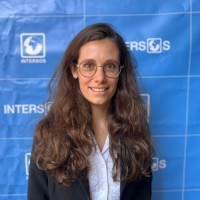
In an era where companies are called to act as conscious social actors, our corporate journey in Diversity, Equity & Inclusion (DE&I) at Mia-Platform encourages us to look beyond the dynamics of our offices and our local territory in the strict sense. In the second session of the DE&I program that we run within the company, we hosted Chiara Troiano, representative of Intersos, to address a topic as delicate as it is urgent: gender-based violence in contexts of war and humanitarian crisis.
Intersos, founded in 1992, is the first Italian humanitarian organization established to intervene on the front lines of emergencies, operating in accordance with strict principles of neutrality, impartiality, independence, and humanity. The talk provided us with a magnifying lens to understand how fundamental rights are defended in places where the very foundations of civil coexistence seem to be missing.
Language as an act of protection
In the humanitarian sector, and particularly when addressing gender-based violence, the choice of words is never a mere formality, but a true "act of protection".
Some practices include:
- Survivor, not victim: Intersos favors the use of the term "survivor" in psychosocial support contexts. This choice aims to value the person's resilience and capacity to overcome trauma, reserving the term "victim" exclusively for legal and judicial settings.
- The validity of consent: a cornerstone of the ethical approach is consent. To be deemed valid, it must be freely expressed by adults in full possession of their mental faculties, without any coercion or threat.
- Ethical data collection: because these involve extremely sensitive situations and data, the collection and sharing of information occur through standardized and coded systems, in order never to compromise the identity or safety of the assisted individuals.
The context: violence as a weapon of war
Chiara Troiano highlighted the dramatic ongoing crisis in Sudan, currently the worst displacement crisis in the world, with 30.4 million people in need. In this tragic scenario, sexual and gender-based violence (rape, assaults, forced marriages) is systematically used as an instrument of war.
Fleeing this violence drives over one million refugees toward neighboring Chad, an area where two different types of crises and, consequently, violence unfold:
- Wadi Fira (Eastern Chad): this is a transit crisis linked to the influx of Sudanese refugees. Here, violence occurs mainly on the road and is perpetrated in 65% of cases by unknown individuals or armed groups, often when women travel away to gather essential resources such as water and firewood.
- Lac Province: a structural and protracted crisis involving internally displaced persons. In this area, violence is mostly domestic, taking place in 68% of cases at home, and perpetrated in 62% of cases by an intimate partner.
Intervention and community: safe spaces and the "Agents of Change"
How can one intervene to break this cycle of abuse, especially when cultural barriers and omertà hinder reporting? Intersos works closely with local communities based on building trust.
The main strategic responses include:
- Safe Spaces (Espaces Sûrs): these are protected locations reserved for women and girls, managed entirely by female staff. Within them, survivors find psychological support and the opportunity to participate in income-generating activities to rebuild their economic autonomy.
- Men as agents of change: dismantling violence requires acting on social norms. Intersos actively engages men and boys through awareness initiatives, empowering them to act as "antennas" and advocates for women's rights within their own communities.
- Cash for Protection: the provision of direct financial assistance to cover basic needs, crucial for preventing further abuse and supporting mothers who, due to trauma or caregiving burdens, are unable to work.
A reflection for our ecosystem
Hearing the stories of immense resilience brought by Intersos reminds us that the ultimate goal of any intervention, whether humanitarian or related to corporate development, is human autonomy.
This talk invites us not to look away from global crises that receive less media attention, and to reflect on how inclusion, respect for consent, and the fight against gender stereotypes are universal struggles. As the speaker recalled in closing, the first step in supporting these projects is precisely our commitment to inform ourselves and to listen.